

The first men
Описание
Howard Fast's "The First Men" recounts the extraordinary tale of a child who, after being lost as an infant, was raised by wolves. The narrative meticulously details the child's remarkable survival and the challenges faced by the villagers in their attempts to reintegrate her into human society. The story delves into the complexities of human nature and adaptability, exploring the profound impact of environment on development. The author's account highlights the observations of an anthropological investigator, providing a unique perspective on the child's physical and mental state. The text emphasizes the child's remarkable resilience and the challenges of re-establishing human connection. The story also features the perspectives of local experts, including an Indian anthropologist, who offer insights into the child's condition. This historical account is a powerful exploration of human nature and the profound effects of environment on development.
Calcutta, India
Nov. 4th, 1945
Mrs. Jean Arbalaid
Washington, D. C.
My dear sister:
I found it. I saw it with my own eyes, and thereby I am convinced that I have a useful purpose in life — overseas investigator for the anthropological whims of my sister. That, in any case, is better than boredom. I have no desire to return home; I will not go into any further explanations or reasons. I am neurotic, unsettled and adrift. I got my discharge in Karachi, as you know. I am very happy to be an ex-GI and a tourist, but it took me only a few weeks to become bored to distraction. So I was quite pleased to have a mission from you. The mission is completed.
It could have been more exciting. The plain fact of the matter is that the small Associated Press item you sent me was quite accurate in all of its details. The little village of Chunga is in Assam. I got there by 'plane, narrow gauge train and ox-cart — a fairly pleasant trip at this time of the year, with the back of the heat broken; and there I saw the child, who is now fourteen years old.
I am sure you know enough about India to realize that fourteen is very much an adult age for a girl in these parts — the majority of them are married by then. And there is no question about the age. I spoke at length to the mother and father, who identified the child by two very distinctive birthmarks. The identification was substantiated by relatives and other villagers — all of whom remembered the birthmarks. A circumstance not unusual or remarkable in these small villages.
The child was lost as an infant — at eight months, a common story, the parents working in the field, the child set down, and then the child gone. Whether it crawled at that age or not, I can't say; at any rate, it was a healthy, alert and curious infant. They all agree on that point.
How the child came to the wolves is something we will never know. Possibly a bitch who had lost her own cubs carried the infant off. That is the most likely story, isn't it? This is not lupus, the European variety, but pallipes, its local cousin, nevertheless a respectable animal in size and disposition, and not something to stumble over on a dark night. Eighteen days ago, when the child was found, the villagers had to kill five wolves to take her, and she herself fought like a devil out of hell. She had lived as a wolf for thirteen years.
Will the story of her life among the wolves ever emerge? I don't know. To all effects and purposes, she is a wolf. She cannot stand upright — the curvature of her spine being beyond correction. She runs on all fours and her knuckles are covered with heavy callus. They are trying to teach her to use her hands for grasping and holding, but so far unsuccessfully. Any clothes they dress her in, she tears off, and as yet she has not been able to grasp the meaning of speech, much less talk. The Indian anthropologist, Sumil Gojee, has been working with her for a week now, and he has little hope that any real communication will ever be possible. In our terms and by our measurements, she is a total idiot, an infantile imbecile, and it is likely that she will remain so for the rest of her life.
On the other hand, both Professor Gojee and Dr. Chalmers, a government health service man, who came up from Calcutta to examine the child, agree that there are no physical or hereditary elements to account for the child's mental condition, no malformation of the cranial area and no history of imbecilism in her background. Everyone in the village attests to the normalcy — indeed, alertness and brightness — of the infant; and Professor Gojee makes a point of the alertness and adaptability she must have required to survive for thirteen years among the wolves. The child responds excellently to reflex tests, and neurologically, she appears to be sound. She is strong — beyond the strength of a thirteen year old — wiry, quick in her movements, and possesses an uncanny sense of smell and hearing.
Professor Gojee has examined records of eighteen similar cases recorded in India over the past hundred years, and in every case, he says, the recovered child was an idiot in our terms — or a wolf in objective terms. He points out that it would be incorrect to call this child an idiot or an imbecile — any more than we would call a wolf an idiot or an imbecile. The child is a wolf, perhaps a very superior wolf, but a wolf nevertheless.
I am preparing a much fuller report on the whole business. Meanwhile, this letter contains the pertinent facts. As for money — I am very well heeled indeed, with eleven hundred dollars I won in a crap game. Take care of yourself and your brilliant husband and the public health service.
Love and kisses,
Harry
___________________________________________
HARRY FELTON
HOTEL EMPIRE
CALCUTTA, INDIA
NOVEMBER 10, 1945
Похожие книги

100 великих интриг
Политические интриги – движущая сила истории. От Суда над Сократом до Нюрнбергского процесса, эта книга исследует ключевые заговоры, покушения и события, которые сформировали судьбы народов. Автор Виктор Николаевич Еремин, известный историк, раскрывает сложные политические механизмы и человеческие мотивы, стоящие за великими интригами. Книга погружает читателя в мир древних цивилизаций и эпох, исследуя захватывающие истории, полные драмы и неожиданных поворотов. Откройте для себя мир политических интриг и их влияние на ход истории. Погрузитесь в захватывающий мир политической истории.
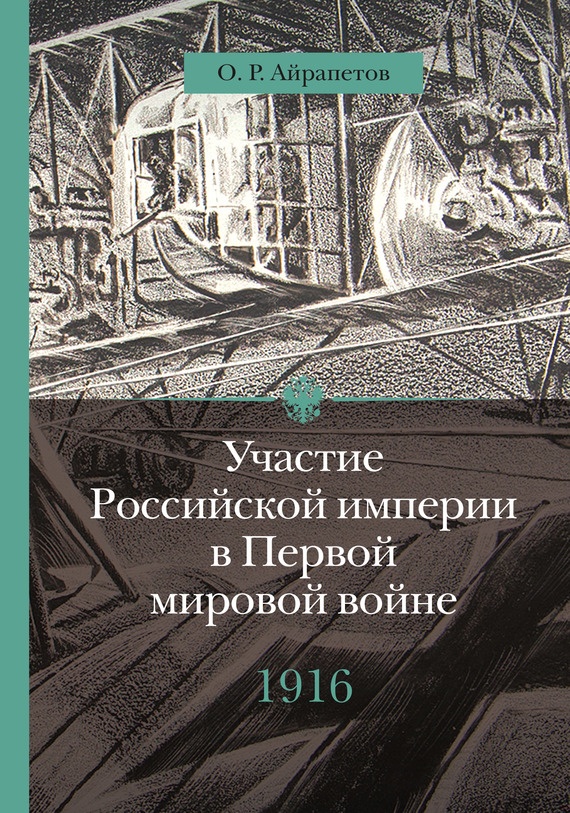
1916 год. Сверхнапряжение
В третьем томе фундаментального исследования Олега Рудольфовича Айрапетова о Первой мировой войне, автор углубляется в политическую жизнь России в 1916 году. Книга анализирует сложные взаимосвязи внешней, военной, внутренней и экономической политики Российской империи в предвоенный период. Айрапетов исследует причины и предпосылки событий 1917 года, основываясь на детальном анализе событий на Кавказском фронте, взаимодействии с союзниками (Великобритания) и стратегических планах Ставки. Работа представляет собой глубокий исторический анализ, объединяющий различные аспекты политической, военной и экономической истории России накануне революции.
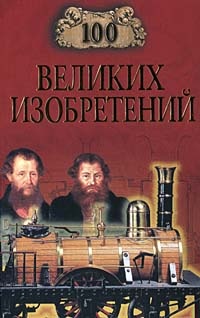
100 великих изобретений
Эта книга – увлекательное путешествие по истории человечества, представленное через призму 100 великих изобретений. Автор Константин Рыжов подробно и правдиво рассказывает о каждом изобретении, начиная с древних орудий труда и заканчивая современными технологиями. Книга прослеживает нелегкий путь человеческой мысли, от первых примитивных инструментов до сложных компьютерных сетей. В ней вы найдете подробную технологическую таблицу, содержащую все упомянутые открытия и изобретения. Изучите ключевые моменты в развитии человечества через историю его великих изобретений!
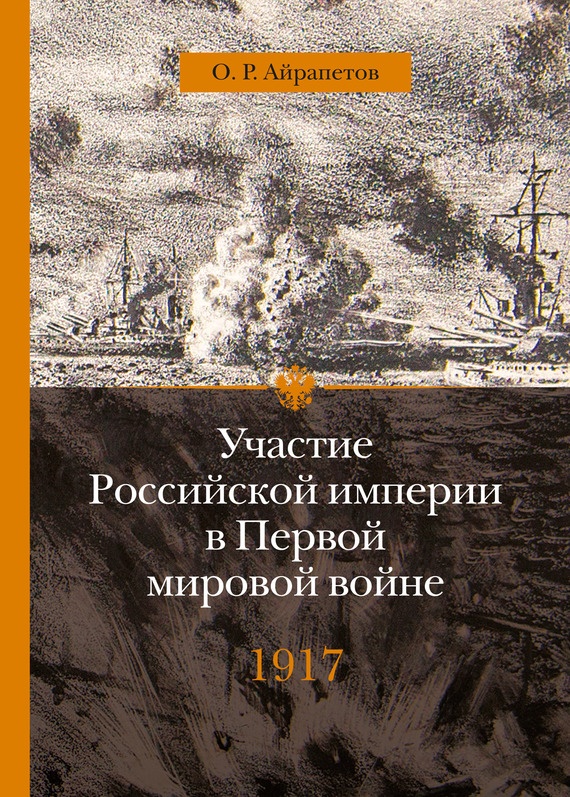
1917 год. Распад
В заключительном томе "1917. Распад" Айрапетов исследует взаимосвязь военных и революционных событий в России начала XX века. Книга анализирует результаты свержения монархии и прихода к власти большевиков, их влияние на исход и последствия Первой мировой войны. Автор объединяет анализ внешней, военной, внутренней и экономической политики Российской империи в 1914-1917 годах, включая предвоенный период, который предопределил развитие конфликтов. Это фундаментальное исследование, основанное на документах и свидетельствах, раскрывает причины и последствия распада империи.