
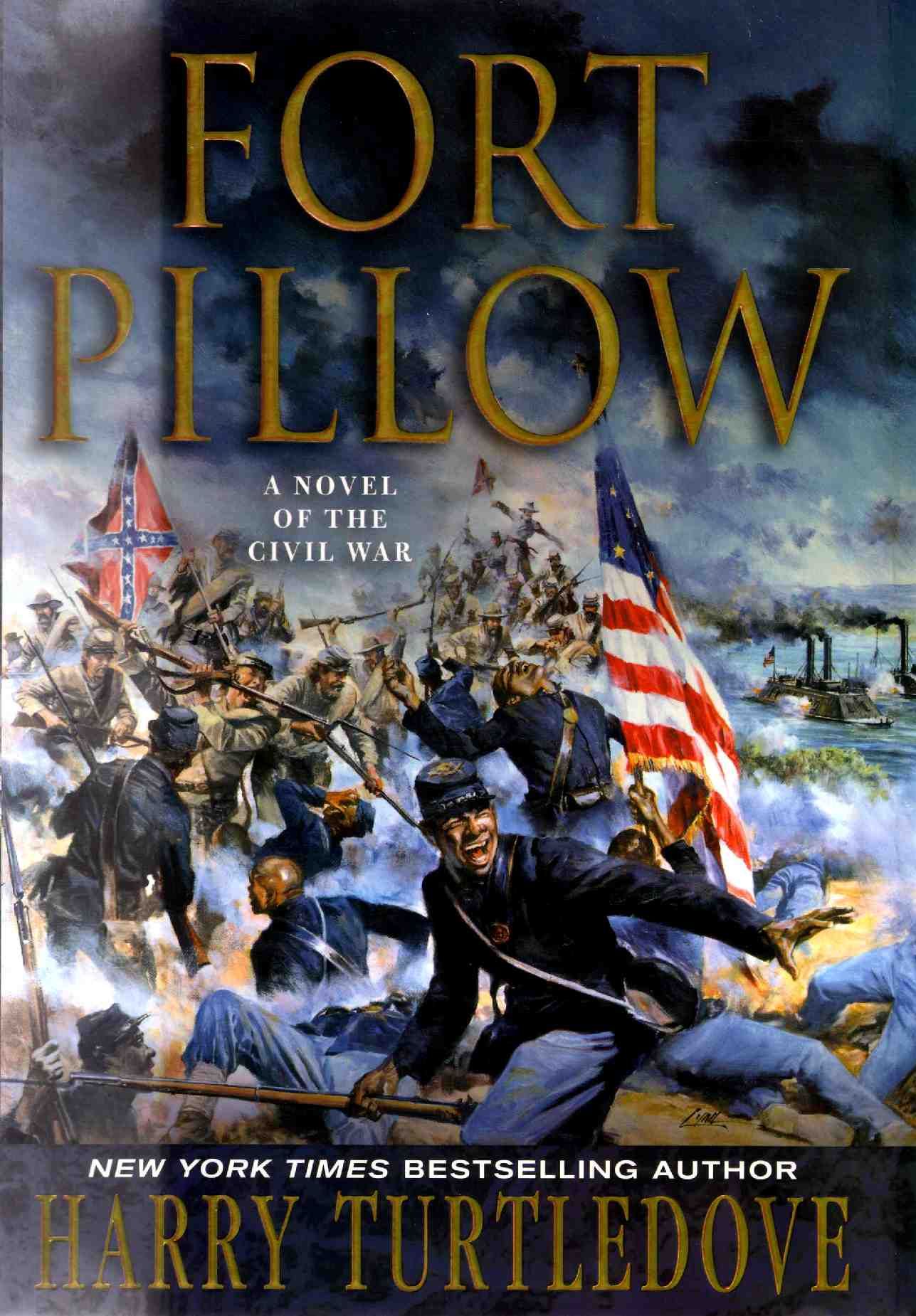
FORT PILLOW
Описание
In the American Civil War's tumultuous landscape, Harry Turtledove's "Fort Pillow" plunges readers into a pivotal moment of conflict. The narrative centers on General Nathan Bedford Forrest's strategic maneuvers and the grim realities of the siege. The story vividly portrays the clash between Union and Confederate forces, highlighting the complex political and social dynamics of the era. The text expertly captures the atmosphere of tension and brutality, offering a compelling perspective on the war's impact on both soldiers and civilians. The author's meticulous research and evocative prose transport readers to the heart of the battle, creating a deeply engaging and thought-provoking experience.
JACKSON, TENNESSEE, WAS A TOWN laid out with big things in mind. The first streets were ninety feet wide. The first courthouse was built of logs, back at the start of the 1820s. Now, more than forty years later, buildings of red and gray brick prevailed. Oaks and elms helped shade those broad streets.
The Madison County seat had not flourished quite so much as its founders hoped. Still, with the Forked Deer River running through the town and two railroads meeting there, Jackson was modestly prosperous, or a bit more than modestly. It was a considerable market for lumber and furs and produce from the farms in the Forked Deer valley.
When civil war tore the United States in two, Jackson went back and forth between Union and Confederacy several times. Confederate General Beauregard made his headquarters there in early 1862. From that summer to the following spring, Jackson lived under the Stars and Stripes as one of U.S. Grant's supply depots. Then Nathan Bedford Forrest's cavalry ran the Yankees out again.
In June 1863, U.S. General Hatch defeated the Confederate garrison and reoccupied the town. Now, in April 1864, Forrest was back, and the Stainless Banner replaced the U.S. flag.
Forrest had his headquarters in the Duke home on Main Street. Two years earlier, Grant had stayed in the same two – story Georgian Colonial house. The Dukes were happier to accommodate the Confederate cavalry commander than they had been to host his opponent in blue.
Although Forrest went to church on Sunday morning, he did not treat the Sabbath as a day of rest. For one thing, he couldn't afford to. For another, his driving energy made him hate idleness at any time. He paced back and forth across the Dukes' parlor like a caged catamount, boots clumping on the rugs and thumping on the oak planks of the floor.
He was a big man, two inches above six feet, towering over the other Confederate officers in the room. He could have beaten any of them in a fight, with any weapons or none. He knew it and they knew it; it gave him part of his power over them. Though his chin beard was graying, his wavy hair had stayed dark. His blue eyes could go from blizzard cold to incandescent in less than a heartbeat.
“I wrote to Bishop Polk last week that I was going to take Fort Pillow,” he said. He had a back – country accent, but a voice that could expand at need to fill any room or any battlefield. “I reckon we can go about doing it now. All the pieces are in place. “
His aide – de – camp, Captain Charles Anderson, nodded. “Yes, sir,” he said. “General Buford's raising Cain up in Kentucky, and we've got enough men looking busy down by Memphis to keep the damnyankees there from moving north along the Mississippi.”
“About time we gave that garrison what it deserves,” Forrest said. “Past time, by God. Niggers and homemade Yankees…” He scowled at the idea.
“Wonder which is worse,” Anderson said.
“Beats me.” Nathan Bedford Forrest's scowl deepened. That black men should take up arms against whites turned every assumption on which the Confederate States of America were founded upside down and inside out. “You sooner get bit by a cottonmouth or a rattlesnake?”
Dr. J. B. Cowan, the chief surgeon on Forrest's staff, looked up from his cup of sassafras tea. “No,” he said. “I'd sooner not.”
The concise medical opinion made Forrest and the rest of his staff officers laugh. But mirth did not stay on the commanding general's face for long. Most of the white Union troops in Fort Pillow were Tennesseans themselves, enemy soldiers from a state that belonged in the Confederacy. When they came out of their works, they plundered the people who should have been their countrymen. If half of what Forrest heard was true, they did worse than that to the womenfolk. And so…
“We'll move then,” Forrest said. “Captain Anderson!” “Yes, sir?”
“Colonel McCulloch's brigade is at Sharon's Ferry along the Forked Deer, right?” Forrest said. Anderson nodded. Forrest went on, “And General Bell's got his brigade up at Eaton, in Gibson County?” He waited.
Charles Anderson nodded again. “Yes, sir, that's where he was last we heard from him.”
Forrest waved dismissively. “Yankees haven't got enough men up there to shift him, so that's where he's at, all right. How many soldiers you reckon McCulloch and Bell put together have?”
Anderson's eyes took on a faraway look. Under his mustache, his lips moved silently. He wore a neat beard much like Bedford Forrest's. “I'd say about fifteen hundred, sir.”
“ 'Bout what I ciphered out for myself. Wanted to make sure you were with me.” Forrest's gaze sharpened. “Now, Captain, how many Yankees d'you suppose Fort Pillow holds?”
“It can't have half that many.” This time, Anderson didn't hesitate, though he did add, “They've got a gunboat out in the river to support the place.”
Похожие книги

Вечный капитан
«Вечный капитан» – это захватывающий цикл романов, повествующий о капитане дальнего плавания, путешествующем по разным эпохам и странам. Он – наш современник, и его истории переплетаются с историей морского флота. Читатели познакомятся с различными периодами и народами, наблюдая за судьбой главного героя. Книга сочетает в себе элементы альтернативной истории, приключений и боевой фантастики. В цикле представлены такие сюжетные линии, как "Херсон Византийский", "Морской лорд", "Граф Сантаренский", "Князь Путивльский", и другие, каждая из которых рассказывает увлекательную историю, наполненную событиями и драматическими поворотами.

Афганский рубеж (СИ)
Война забрала жизнь главного героя, но судьба дала ему второй шанс – вернуться в прошлое. Оказавшись в 1980 году в Афганистане, он осознает, что его опыт боевого летчика очень нужен СССР. Командование отправляет его на горячий фронт. В знойной пустыне, среди стреляющих гор, он сталкивается с реалиями войны, выполняя сложные задания и руководя группой спецназа. Книга погружает читателя в атмосферу 1980-х годов, полную опасностей и приключений.

Дикая война
В преддверии тайги войны, на станции происходит нечто странное и опасное. Главный герой, попавший в чужое тело, должен разобраться в загадочных событиях. Он, старатель, встречается с жестокими противниками, которые охотятся в тайге. В этом мире, полном опасностей, ему предстоит не только выжить, но и раскрыть тайну происходящего. Сражения, выживание и загадки ждут читателя в этой захватывающей альтернативной истории. Настоящая боевая фантастика с элементами детектива.

Кротовский, вы сдурели (СИ)
В альтернативной России начала XX века Кротовский, попавший в царский двор, сталкивается с неожиданными заданиями. Император поручает ему непростую миссию – взять под контроль вольный город Кустов. Кротовский, обладающий особыми навыками и знаниями, должен найти способ решить эту задачу, не прибегая к прямому военному штурму. Его ждет множество испытаний и сложных решений, которые повлияют на судьбу России. Приключения Кротовского продолжаются в увлекательной альтернативной истории, полной интриг и неожиданных поворотов.